The Practice Guide
A rejection of wellness jargon in favor of discipline, bone, and structured movement.
Yoga Path UK follows the Friction Principle: we do not use practice to escape reality. We use it to build the strength and breath capacity required to thrive within it. This guide outlines our technical methodology—from foundational stability to complex autonomic flow.
The System
"Yoga is not about aesthetic flexibility; it is about learning to breathe within the friction of effort."
Our instructional approach prioritizes joint health and technical accuracy over the pursuit of advanced poses. We measure progress through stability and breath synchronization, not visual performance.
Stability First
Every sequence begins with neutral spinal alignment and grounding. Before any dynamic movement, we establish a rigid foundation through the feet and hands (Hasta Bandha and Pada Bandha). This ensures joint safety and prepares the nervous system for work.
- + Joint Neutrality
- + Core Engagement
- + Static Endurance
Breath Synchronization
Movement only occurs on the transition of the breath. We employ a functional Ujjayi technique that builds internal heat while maintaining a steady heart rate. If the breath becomes jagged, the intensity of the physical practice must decrease.
- + Rhythmic Consistency
- + Rib-Cage Expansion
- + Diaphragmatic Control
Controlled Transition
The "yoga" happens in between the poses. We focus on the biomechanics of moving from one shape to the next. Transitioning with control prevents momentum-based injury and forces the practitioner to stay present in the effort.
- + Slow-Twitch Activation
- + Eccentric Strength
- + Fluidity Under Load
Friction creates
clarity.
The Matrix
Category-specific cues for functional movement.
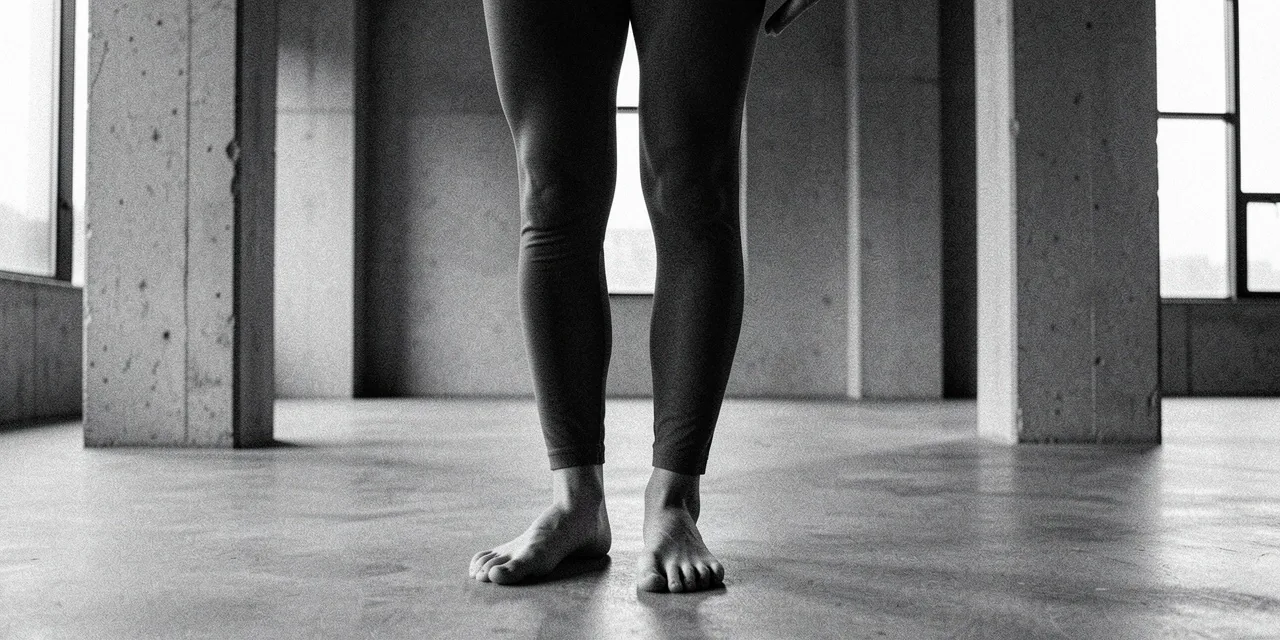
Standing Poses
Foundation & Grounding. We prioritize pelvic stability over depth. Cues focus on the internal rotation of the thighs and active engagement of the arches.
Study the foundationInversions & Control
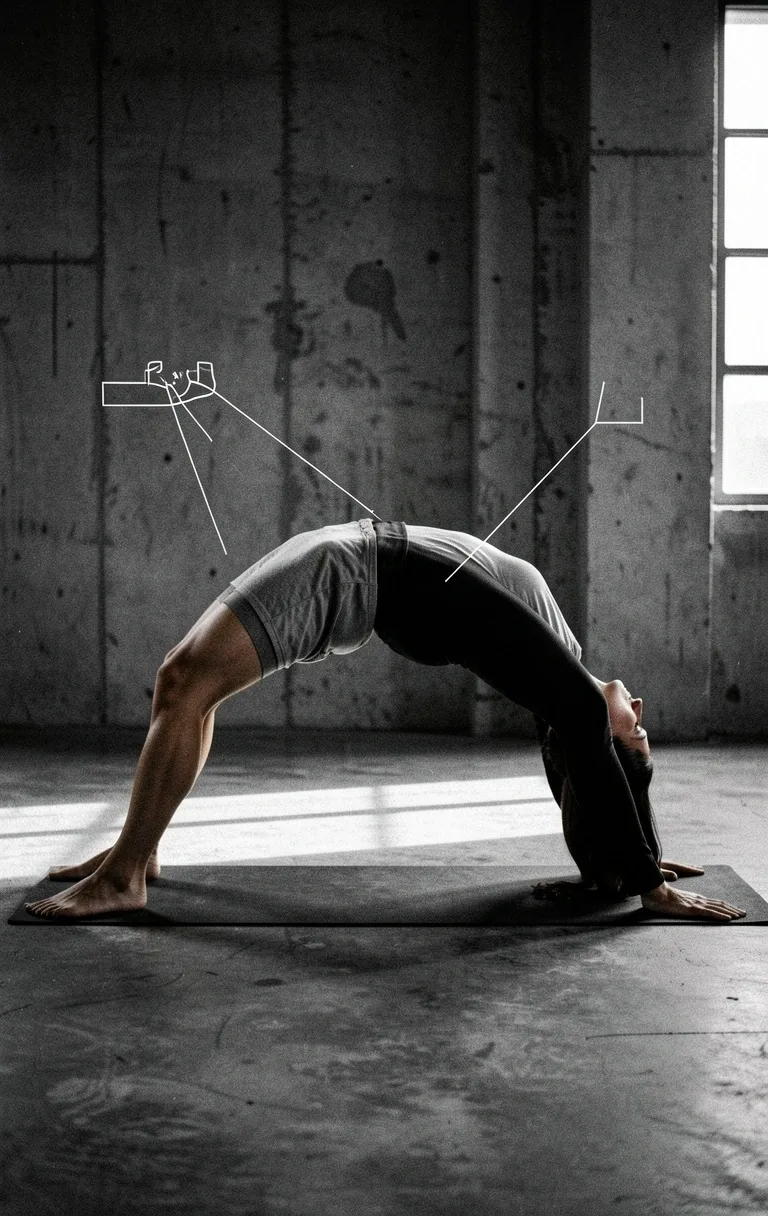
Movement focused on circulation and neurological focus. We teach inversions as a study of scapular strength rather than balance "tricks." Focus is on core bracing and rib-cage containment.
Down-Regulation
Neurological resetting through long-hold passive shapes. We use props (blocks/bolsters) to facilitate safe joint opening without stressing the ligaments. This is systematic decompression.
Technical Deep Dive
For practitioners stuck at a plateau. Personalized biomechanic adjustment tailored to your unique anatomical constraints.
The Roadmap
Mobility & Foundation
Initial grounding. We focus on identifying blind spots in joint mobility and building the static strength required for safe alignment. No complex transitions yet.
- — Alignment Fundamentals
- — Core Connectivity
- — Joint ROM Baseline
Duration & Capacity
Building stamina. We introduce longer holds and more dynamic sequences while maintaining strict breath synchronization. This is where the mental "friction" begins.
- — Strength Endurance
- — Breath Expansion
- — Vinyasa Mechanics
Complex Flow
Integrated mastery. Combining complex asana with sustained autonomic focus. The student manages their own intensity through advanced breathwork and refined proprioception.
- — Advanced Arm Balances
- — Inversion Stability
- — Autonomic Management